
Priyanshu Kar
4th Year, BA-LLB, National University of Juridical Sciences (NUJS), Kolkata
PART I
Published digitally on 2nd October, 2024, in Monobithi Vol 2.2, pp 33-45
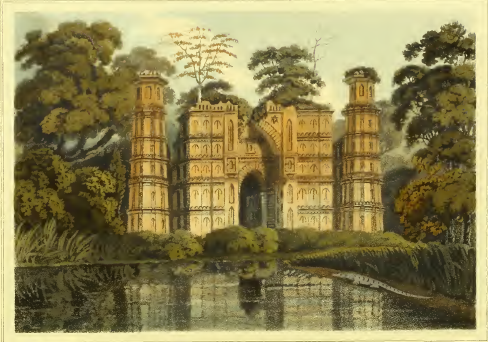
Dakhil Darwaza, Gour : Painting by Henry Creighton Esq., 1817 1
A couple of weeks back, my friend and I visited the fifth most populous city of the 14th and early 15th century India – Gaur. Well, this was only then, because when we visited Gaur, we found a marshy hinterland with no traces of the political and cultural grandeur it once enjoyed as the capital city of the Bengal Sultanate. In fact, our experience was not much different from Henry Creighton’s, a 19th century amateur painter and indigo factory manager who pioneered the English exploration of the abandoned city. In his seminal work, The Ruins of Gour: Described and Represented in Eighteen Views with a Topographical Map, Creighton describes the surroundings thus, “Trees and high grass now fill up the space, and shelter a variety of wild creatures, bears, buffaloes, deer, wild hogs, snakes, monkies, peacocks, and the common domestic fowl, rendered wild for want of an owner.” 1 Though not greeted by wild bears and deer, or thick grass growth, we, like Creighton, were greeted by some isolated, disconnected structures - out of context, refusing to tell the tale of its former glory. Creighton also feels the same way when he writes thus, “In passing through so large an extent of formal [former] grandeur, once the busy scene of men, nothing presents itself but these few remains.” This precise feeling of isolation led me to discover that all available literature on Gaur is either hundred years old and hopelessly out of date, or extremely restricted to the academic fraternity and lacking public access. This article stems from this precise realisation… that walls don’t speak for themselves unless we let them speak through a story – the story of one of the most culturally rich and diverse capitals of Bengal – Gaur and Pandua.
As capital cities of medieval Bengal in the 14th and mid-16th century, Gaur and Pandua saw the rise and fall of three Sultani dynasties, independent of the Sultanate of Delhi - the Ilyas Shahi, the ‘restored’ Ilyas Shahi and the Husain Shahi. Though the exact location of Shashanka and Sena Gaur is still subject to considerable speculation and debate, medieval Gaur is located on the eastern strip of land between the Ganges and the Mahananda rivers, and south of the present town of Malda, which today survives only in ruins. The earlier name of the city was Lakshmanavati which was later Islamized as Lakhnauti 2. Pandua, located about twenty miles from Gaur and twelve miles from Malda, is believed to have been the earlier capital of Bengal during the reign of Shamsuddin Ilyas Shah (1342-1358 A.D.) During the fourteenth to the sixteenth centuries, power seems to have been constantly shifting between these two capital cities of Gaur and Pandua.
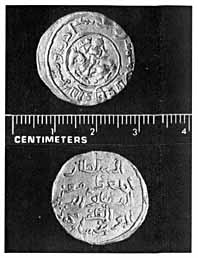
Figure 1 Gold coin of Muhammad Bakhtiar, struck in A.H. 601 (A.D. 1204–5) in Bengal in the name of Sultan Muhammad Ghuri. Obverse and reverse. Photo by Charles Rand, Smithsonian Institution. (Source: The Rise of Islam And The Bengal Frontier 1204 - 1760 By Richard M Eaton).
The story of Gaur 3 begins with the capture of the Sena capital of Lakshmanavati in 1204 by a Turkish general of the Sultan Mohammad Ghori and a fierce cavalry warrior, Muhammad Bakhtiyar Khalji. A very interesting, near contemporary account of this decisive moment is captured by the account of the chronicler Minhaj al-Siraj, who visited Bengal forty years after the event and personally collected oral traditions concerning it. “After Muhammad Bakhtiyar possessed himself of that territory,” wrote Minhaj, “He left the city of Nudiah in desolation, and the place which is (now) Lakhnauti he made the seat of government..” More interestingly, Minhaj also adds that Bakhtiyar and his men disguised themselves as horse dealers and slipped into the royal city of Nudiya. Once inside, they rode straight to the king’s palace, where they confronted the guards with brandished weapons. Utterly out of wits, the last Sena ruler, Lakshman Sen, who had just sat down to have his dinner, “hastily departed through a back door and fled with many of his retainers to the forested hinterland of eastern Bengal, abandoning his kingdom altogether.” 4
Militarily, Muhammad Bakhtiyar’s conquest was a blitzkrieg; his cavalry of some ten thousand horsemen had utterly overwhelmed a local population unaccustomed to mounted warfare. After the conquest, Bakhtiyar and his successors continued to hold a constant and vivid symbol of their power—their heavy cavalry—before the defeated Bengalis. Around the same time, Bakhtiyar himself struck a gold coin in the name of his overlord in Delhi, Sultan Muhammad Ghuri, with one side depicting a Turkish cavalryman charging at full gallop and holding a mace in hand (see fig. 1). Beneath this bold emblem appeared the phrase Gauḍa vijaye, “On the conquest of Gaur” (i.e., Bengal), inscribed not in Arabic but in Sanskrit.
All this while however, and not until mid- 14th century, rulers of Bengal were vassals of the Sultanate at Delhi. In 1342, a powerful noble, Shams al-Din Ilyas Shah (1342–57), wrested Bengal free from Delhi’s grip and established the first of several dynasties that remained independent from the Sultans of Delhi for the next two and a half centuries. The break with Delhi was marked by a shift of the Ilyas Shahi capital from Gaur (now Islamised as ‘Lakhnauti’) to Pandua. Obviously, initially, Delhi was not prepared to accept this act of rebellion – as is human nature…so Sultan Firoz Shah Tughlaq, the successor of the (in)famous Mohammad Bin Tughlaq tried to reassert his dominance in the territory of Bengal but failed as his final attacks were repelled by Shamsuddin Ilyas Shah’s able son and successor, Sikandar Shah.5 These inconclusive invasions of Bengal, finally persuaded Firuz and his successors of the futility of trying to hold onto the distant province and Bengal was left undisturbed by North Indian armies for nearly two centuries until Akbar became the Padshah Ghazi (Emperor) of Hindustan.
One of Sultan Sikandar Shah’s grand contributions evidencing the spectacle of his dynasty’s imperial pretensions is the famous Adina Masjid of Pandua – the largest of its kind in the whole of the Indian subcontinent. Completed in 1375, the mosque is one of the best examples of how the sultans of Bengal accepted and appreciated the already existing culture. This is revealed from the fact that the builders reused carved stone from pre-conquest monuments. Moreover, this reuse is also found in the most sacred prayer niches of the mosque, thus revealing the builders’ successful adaptation, and even appreciation, of late Pala-Sena art.6 The imposing monument is also likely to have been a statement directed at Sikandar’s more distant audience, his overlords in Delhi, now bitter rivals. Having successfully defended his kingdom, Sikandar projected his claims of power and independence by erecting a monument greater in size than any edifice built by his North Indian rivals. Its style, moreover, signals a sharp break from the Delhi-based architectural tradition. The western, or Mecca-facing, side of the mosque projects a distinctly imperial mood, reminiscent of the grand style of pre-Islamic Iran.7 Measuring 565 by 317 feet externally, and with an immense courtyard (445 by 168 feet) surrounded by a screen of arches and 370 domed bays, the Adina mosque easily surpassed Delhi’s Begumpur mosque, the principal mosque of Firoz Tughluq (1351–88), in size.8
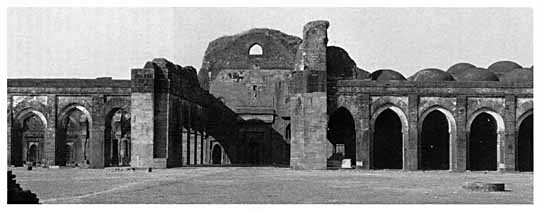
Figure 2 Adina Masjid viewed from the central courtyard onlooking the “king’s throne”. (Source: The Rise of Islam And The Bengal Frontier 1204 - 1760 By Richard M Eaton).
The interior of the Adina mosque also projects an aura of imperial majesty. To the immediate north of the central sanctuary is a raised platform, the so-called “king’s throne” (bādshāh kā takht), which enabled the sultan and his entourage to pray at a height elevated above the common people. And, while the latter entered the mosque from a gate in the mosque’s southeast corner, the “king’s throne” could be reached only through a private entranceway that passed through the western wall. This entire doorway was evidently stripped from some pre-Islamic structure, as can be seen by remnants of a Hindu or Buddhist image in its lintel (figure 3).
Sultan Sikandar ordered the following words inscribed on its western façade of the Masjid:
In the reign of the exalted Sultan, the wisest, the most just, the most liberal and most perfect of the Sultans of Arabia and Persia, who trust in the assistance of the Merciful Allah, Abul Mujahid Sikandar Shah the Sultan, son of Ilyas Shah, the Sultan. May his reign be perpetuated till the Day of Promise (Resurrection).9
One word of praise for God, mentioned in passing, and the rest for the sultan!
The Illyas Shahi Sultans employed Persianised royal etiquettes and culture. They adopted an elaborate court ceremony modelled on the Sasanian imperial tradition and employed a hierarchical bureaucracy. Foreign dignitaries who visited Pandua at its height in the early fifteenth century remarked on a court ceremony that we can recognize as distinctly Persian. A Ming Chinese ambassador in 1415 wrote, “The dwelling of the King, is all of bricks set in mortar, the flight of steps leading up to it is high and broad. The halls are flat-roofed and white-washed inside. The inner doors are of triple thickness and of nine panels. In the audience hall all the pillars are plated with brass ornamented with figures of flowers and animals, carved and polished. To the right and left are long verandahs on which were drawn up (on the occasion of our audience) over a thousand men in shining armour, and on horseback outside, filling the courtyard, were long ranks of (our) Chinese (soldiers) in shining helmets and coats of mail, with spears, swords, bows and arrows, looking martial and lusty. To the right and the left of the King were hundreds of peacock feather umbrellas and before the hall were some hundreds of soldiers mounted on elephants. The king sat cross-legged in the principal hall on a high throne inlaid with precious stones and a two-edged sword lay across his lap.”10
Clearly amazed by the grandness of Pandua’s royal court, the ambassador continues: “Two men bearing silver staffs and with turbaned heads came to usher (us) in. When (we) had taken five steps forward (we) made salutation. On reaching the middle (of the hall) they halted and two other men with gold staffs led us forward with some ceremony as previously. The King having returned our salutations, kotowed before the Imperial Mandate, raised it to his head, then opened and read it. The imperial gifts were all spread out on carpets in the audience hall.” The ambassador was then treated to a sumptuous banquet, after which the sultan “bestowed on the envoys gold basins, gold girdles, gold flagons, and gold bowls.”10 The peacock feathers, the umbrellas, the files of foot soldiers, the throne inlaid with precious stones, the lavish use of gold—all of this point unmistakably to the kind of paraphernalia typically associated with Perso-Islamic and even Sasanian royalty. Only the presence of elephants recalls the ceremony of traditional Indian courts.
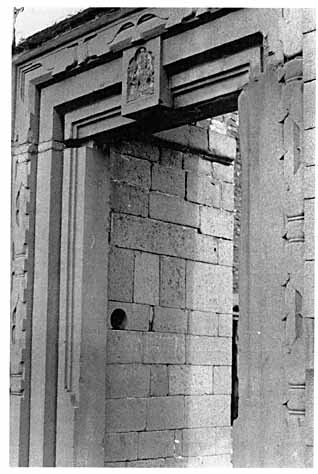
Figure 3 Lintel over the royal doorway of Adina Mosque. (Source: The Rise of Islam And The Bengal Frontier 1204 - 1760 By Richard M Eaton).
The elaborate Turko-Persian rituals and way of life of the sultanate alienated the native Bengali population by the early 15th century. Though the sultanate aligned itself ideologically with the Middle East, it was rooted politically in Bengal. This fundamental contradiction shaped the most severe domestic crisis the sultanate faced, an upheaval focusing on the rise of a remarkable noble named Raja Ganesh. Described in a contemporary letter as “a landholder of four hundred years’ standing” (chahār ṣad sāla zamīndār),11 Ganesh supposedly descended from a ruling family since the Pala and Sena times. Ganesh evidently exerted overwhelming influence over puppet sultans, he was so influential that contemporary Arab chroniclers, and later Firishta too, mistook his de facto rule for de jure sovereignty. 12 In 1415, Ganesha took a very bold step of getting his own son, a lad only twelve years old, named Jadu installed on the throne of Bengal. Now Raja Ganesh, backed by other Bengali nobles, ruled as regent for his own son.
However, the old guard of Turkish nobles prevented him and his supporters from upsetting the symbolic structure upon which the kingdom’s political ideology had rested for over two centuries. For Ganesh’s son Jadu did not reign as a Hindu raja; nor was he installed with any of the appropriate symbols of Hindu kingship. Rather, in what appears to have been a compromise formula worked out between political brokers for the Bengali and Turkish factions, he converted to Islam, got himself renamed as Sultan Jalaluddin Muhammad, and was then allowed to reign as a Muslim king.13 The Raja Ganesh period was a turning point in Bengali history. First, it proved that despite the objections of influential members of the Muslim elite, Bengali Hindus would henceforth be formally integrated into the sultanate’s ruling structure.
Surrounded by rebellious Hindus in the interior and by alarmed members of the Muslim elite in the capital, how did the boy-king and Muslim convert Sultan Jalaluddin assert his own claims to the throne?
The new Sultan attempted to patronize each of the kingdom’s principal constituencies—pious Muslims, Sufis of the Chishti order, and devotees of the Goddess—on a separate, piecemeal basis. He set into motion an order wherein prominent members of the Chishti order were the principal legitimisers of authority in Bengal – a move that would play an important role for the remainder of the independent Sultanate in Bengal and also during the Mughal period. He also started minting coins and reintroduced on his coins the Muslim confession of faith, which had disappeared from Bengal’s coins for several centuries, since the time of Ghiyathuddin ’Iwaz (r. 1213–27), when Bengal was a vassal of the Delhi Sultanate.14 Jalaluddin was a diplomatic Sultan. He very craftily maintained a balance between the Turko-Islamic culture of the ruling class and the native Bengali culture. He thus sent different messages to different constituencies in his kingdom. To Muslims, he portrayed himself as the model of a pious sultan, reviving inscription of the Muslim creed on his coinage and even making a claim, unprecedented in Bengal, to be the caliph of Allah (a practice that had been abandoned since Sultan Shamsuddin established independent sultanate in Bengal). To Hindus, meanwhile, his coins proclaimed a sovereign, who was the son of a Hindu king. Moreover, they bore an image that, without actually naming Chandi or Durga, would have struck responsive chords among devotees of the Goddess. He also patronized Sanskritic culture by publicly demonstrating his appreciation for scholars steeped in classical Brahminic scholarship.15 What is more significant, a contemporary Chinese traveler reported that although Persian was understood by some in the king’s court, the language in universal use there was Bengali.16
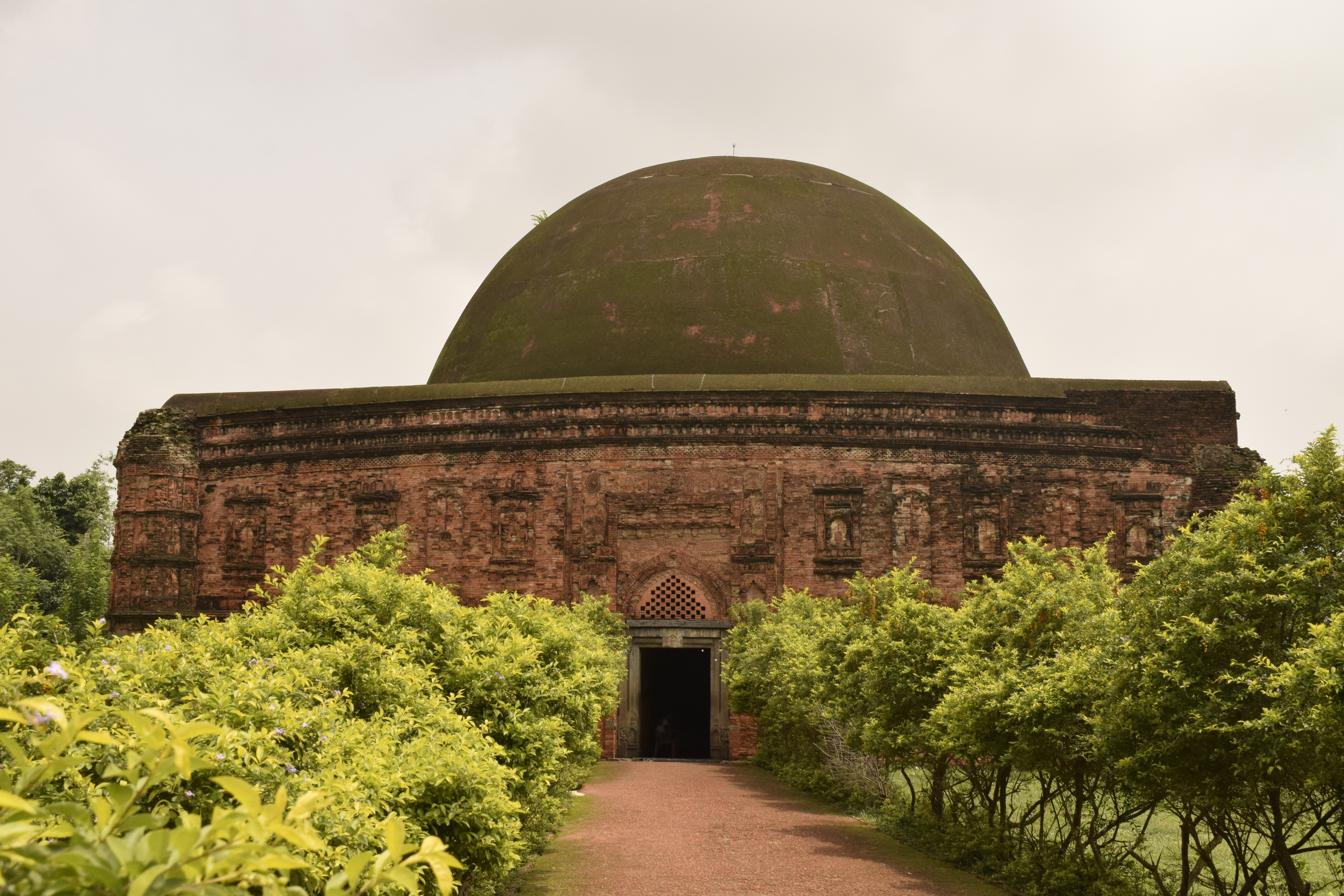
Figure 4 Entrance view of Eklakhi Mausoleum, Pandua. (Photograph by Aritra Bandyopadhyay)
This new mood of incredible cultural fusion is portrayed in the architecture that appeared in Bengal around this time. Abandoning Middle Eastern or North Indian traditions of religious architecture, Bengali mosques from the reign of Sultan Jalaluddin adopted purely indigenous motifs. The Eklakhi mausoleum in Pandua (see fig. 4), said to be Sultan Jalaluddin’s own mausoleum, became a prototype of future Bengali style mosques. Here we find all the hallmarks of the new style: square shape, single dome, exclusive use of brick construction in both exterior and interior, massive walls, engaged octagonal corner towers, curved cornice, and extensive terra-cotta ornamentation.17 A mature example of this new style is seen in the Lattan mosque at Gaur (see fig. 5), built ca. 1493–1519. From where did this inspiration of mosque making come? One source was the familiar thatched bamboo hut found everywhere in the villages of Bengal. Their curved roofs, formed by the natural bend of the bamboo structure under the weight of the thatching, were translated into brick for the first time in the Eklakhi mausoleum, with its gently curved cornice. Thereafter until the end of the sultanate, the thatched hut motif became an essential ingredient of Bengali architecture, whether public or private, Hindu or Muslim. This style of royal culture became so fixed, that it persisted despite the restoration of the old Ilyas Shahi dynasty in 1433, and the drastic changes in the social composition of the ruling class that took place during the century following Jalaluddin’s death in 1432.
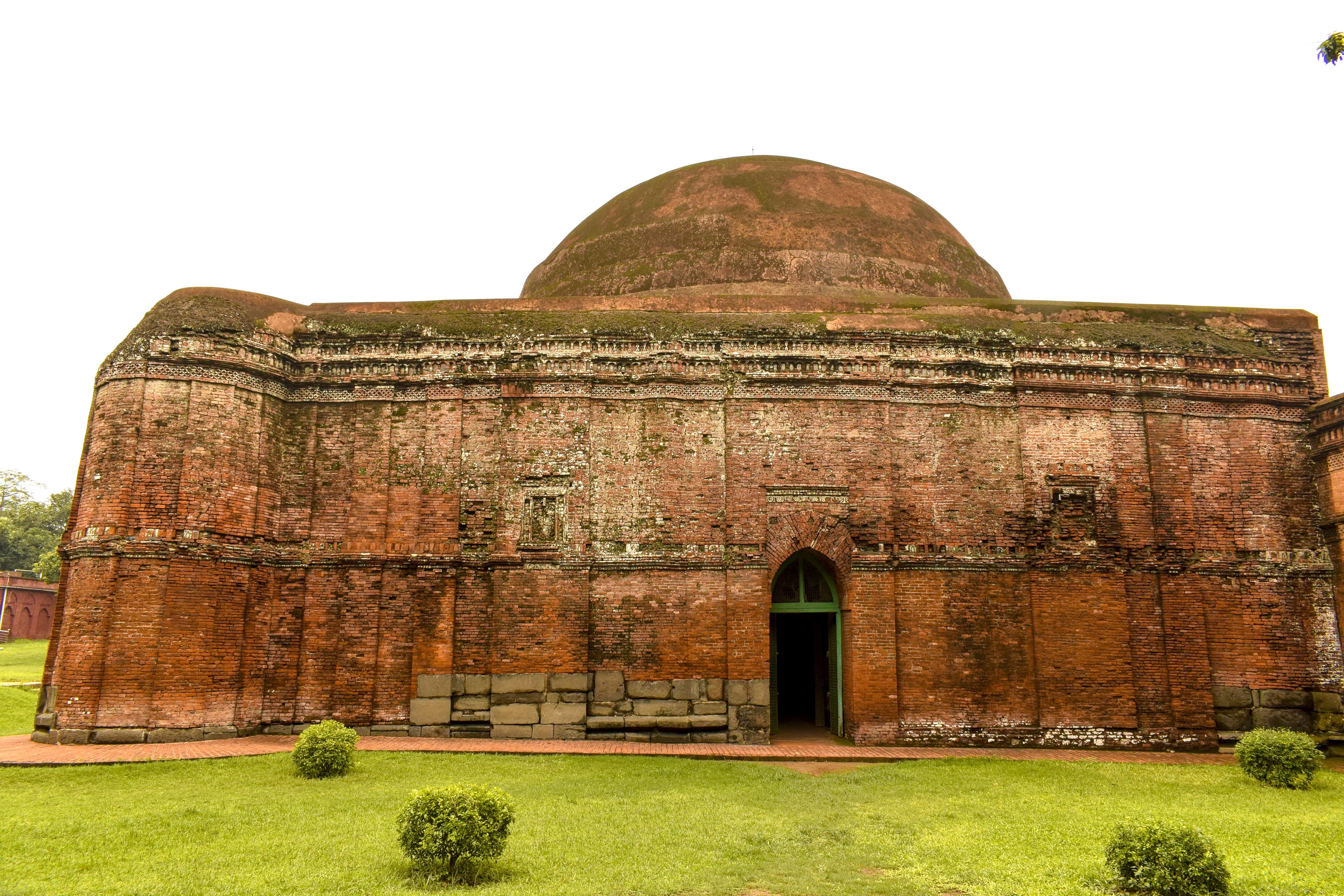
Figure 5 Lattan Mosque, Gaur. (Photograph by Aritra Bandyopadhyay)
With the end of the seventeen year reign of Jalaluddin, on his death, the old Ilyas Shahi house was restored. In the 1460s and 1470s, however, instead of Central Asian Turks, black slaves (ḥabashī) from power. Ultimately, a Meccan Arab who had risen to the office of chief minister under an Abyssinian royal patron, emerged triumphant in a palace coup. He was Allauddin Husain Shah. The ascendancy of Hussain Shah launched the last and one of the most important ruling houses of independent Bengal, the Husain Shahi dynasty. Prominently, it is the reign of Allauddin Hussain Shah and his son Nasir Ud din Nasarat Shah that is generally regarded as the “golden age” of the Bengal Sultanate.18

Figure 6 A butterfly spotted at Eklakhi Mausoleum, heralding the golden age of Bengal Sultanate in the Spring 2025 issue of Monobithi ! (Photograph by Aritra Bandyopadhyay)
1 Henry Crieghton Esq., The ruins of Gour described and represented in eighteen views with a topological map, London, 1817.
2 It needs to be mentioned here that Alexander Cunningham marks the area of Lakshmanavati as located north of Gaur.
3 It must be noted that instead of using the hyphenated ‘Gaur-Pandua’, I have used the term ‘Gaur’ as an all-encompassing word to denote the monuments of both the cities and the larger way in which they exist within scholarship and popular imagination. The name Pandua has been used individually as and where it is applicable.
4 Maulana Minhaj-ud-Din Abu’l-‘Umar-i-‘Usman, Ṭabaḳāt-i-Nāṣirī: A General History of the Muhammadan Dynasties of Asia, Including Hindustan (810–1260), trans. H. G. Raverty (Calcutta: Asiatic Society of Bengal, 1881; reprint, New Delhi: Oriental Books, 1970)
5 Shams-i Siraj ’Afif, Tārīkh-i Fīrūz Shāhī, in The History of India as Told by Its Own Historians, trans. and ed. H. M. Elliot and John Dowson (Allahabad: Kitab Mahal, 1964).
6 Naseem Ahmed Banerji, “The Mihrabs in the Adina Mosque at Pandua, India: Evidence of the Reuse of Pala-Sena Remains” (paper read at the twenty-first conference on South Asia, University of Wisconsin, Madison, November 6–8, 1992).
7 Brown, Indian Architecture, Islamic Period, 5th ed.
8 Asher, “Inventory,” 109–10. See also Yolande Crowe, “Reflections on the Adina Mosque at Pandua,” in The Islamic Heritage of Bengal, ed. George Mitchell (Paris: UNESCO, 1984), 157.
9 Eaton, Richard M. The Rise of Islam and the Bengal Frontier, 1204-1760. University of California Press, 1993.
10 W. W. Rockhill, “Notes on the Relations and Trade of China with the Eastern Archipelago and the Coast of the Indian Ocean during the Fourteenth Century,” T’oung Pao 16, pt. 2 (1915): 441–42.
11 Abdul Karim, “Nur Qutb ’Alam’s Letter on the Ascendancy of Ganesa,” in Muhammad Enamul Haq, Abdul Karim Sahitya-Visarad Commemoration Volume (Dacca: Asiatic Society of Bangladesh, 1972), 338.
12 Ghulam Hussain Salim, Riyāzu-s-Salātīn: A History of Bengal, trans. Abdus Salam
13 Firishta, Tārīkh-i Firishta, 2: 297.
14 Eaton, Richard M. The Rise of Islam and the Bengal Frontier, 1204-1760. University of California Press, 1993.
15 Chintaharan Chakravarti, “Muslim Patronage to Sanskrit Learning,” in B. C. Law Volume, ed. D. R. Bhandarkar et al., pt. 2 (Poona: Bhandarkar Oriental Research Institute, 1946).
16 Ma Huan, Ying-yai Sheng-lan: “The Overall Survey of the Ocean’s Shores,” trans. J. V.G. Mills (Cambridge: Cambridge University Press, 1970), page 161.
17 Hitesranjan Sanyal, “Religious Architecture in Bengal (15th–17th Centuries): A Study of the Major Trends,” Indian History Congress, Proceedings, 32d session (1970).
18 This characterization began with the historian Nizamuddin Ahmad, who in 1594 wrote glowingly of ’Allauddin Husain Shah as “an intelligent and able man,” who “summoned learned, great and pious men from different parts of the kingdom, and showed kindness to them. He made very great efforts and exertions for enriching and improving the condition of the country. Owing to the auspiciousness of his laudable morals, and pleasing virtues he performed the duties of sovereignty for long years; and all his life was passed in pleasure and enjoyment.” Nizamuddin Ahmad, ṭabaqāt-i Akbarī.